Prototype first, in pieces
Rather than fight it inside the product code, I built motion prototypes that broke the animation into separate pieces, solved each one, and put them back together.
Front-end engineering case study · 2024
In 2024 Apple Music revealed its list of the 100 best albums through a dedicated microsite. I was a senior front-end engineer on the team, turning the design into the production site. It went on to win a Signal Award that year.
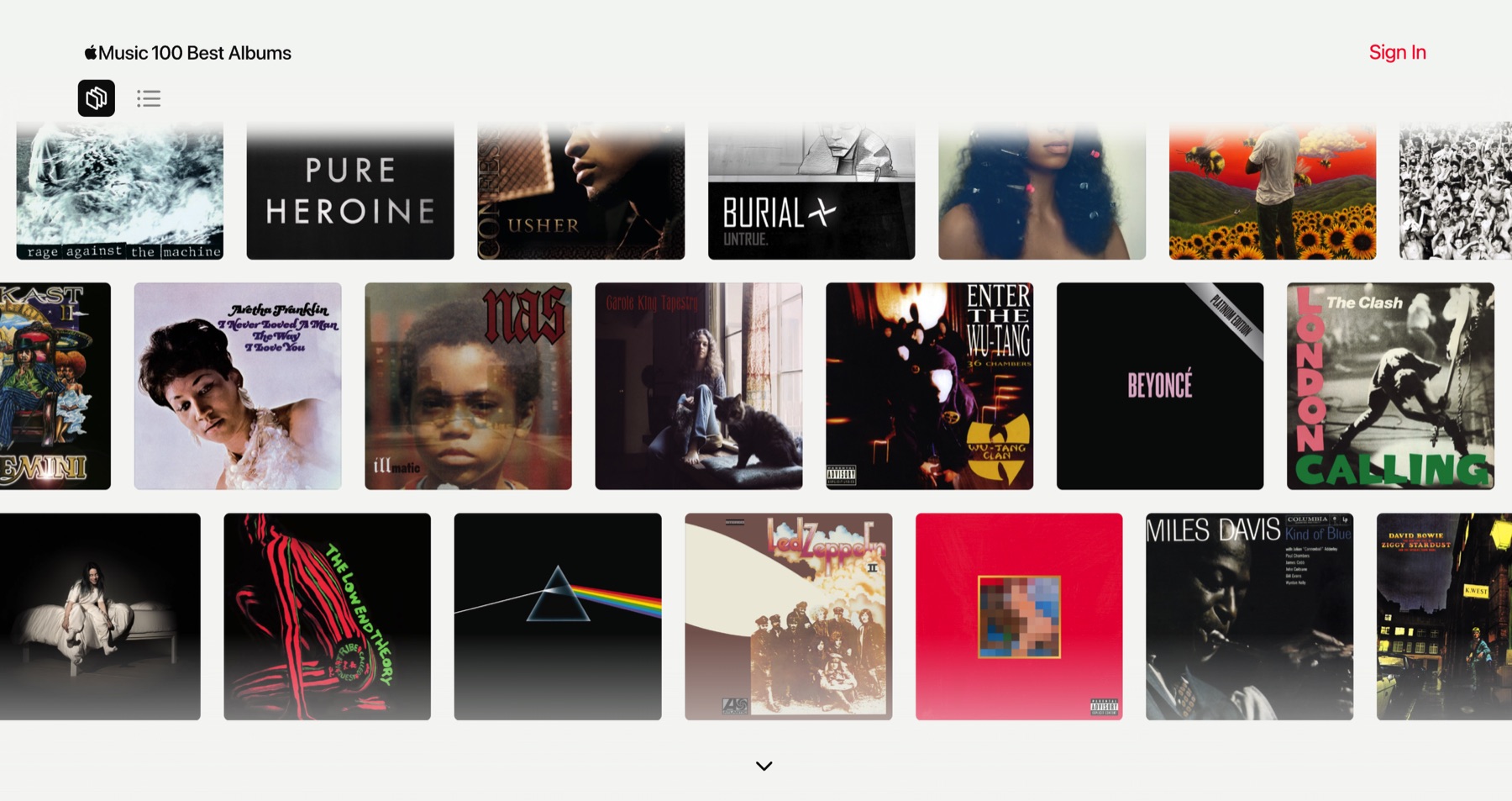
Two toggles at the top left switch between looking at artwork and reading the ranking; opening any album leads to a view of its own.
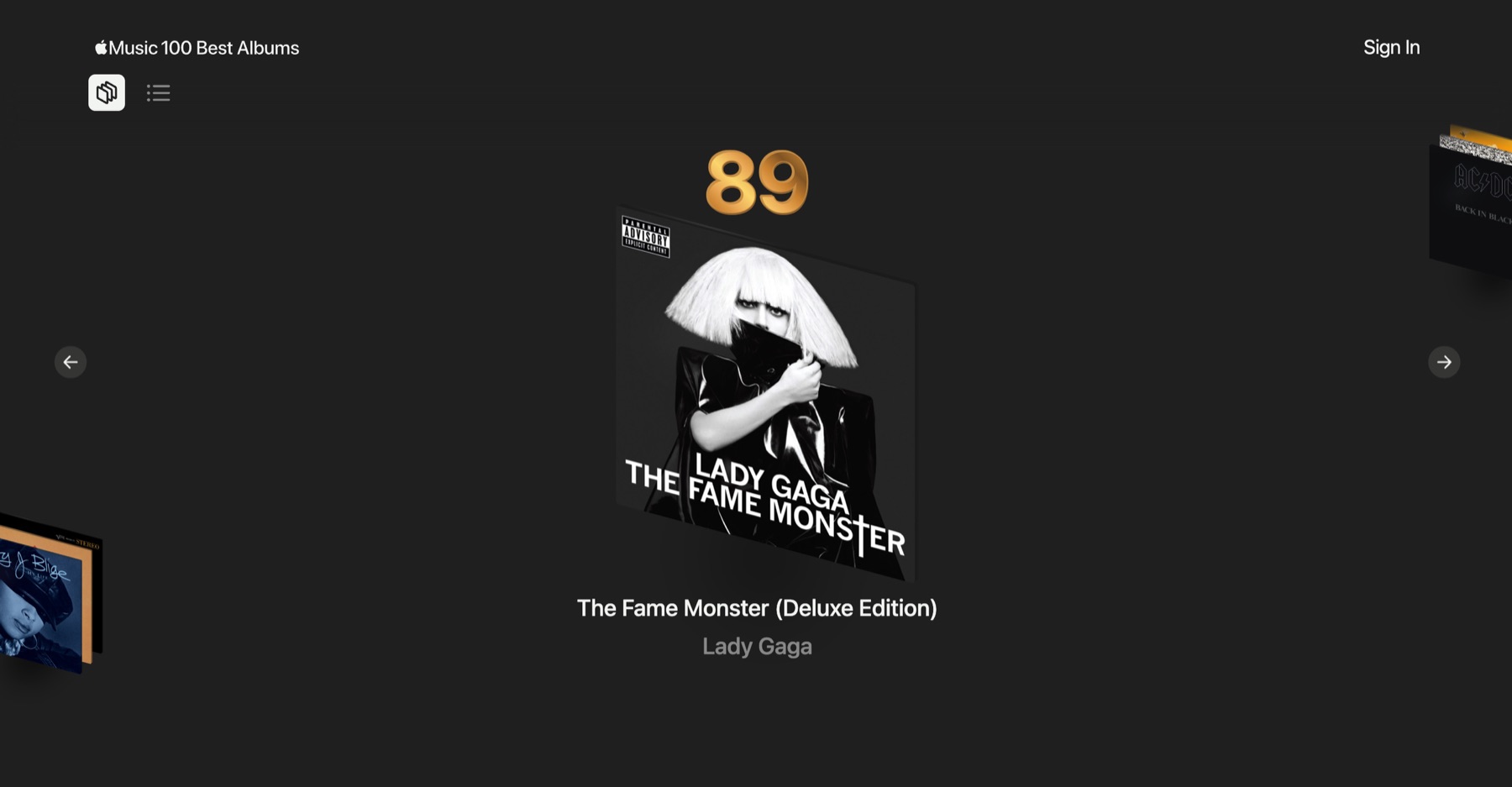
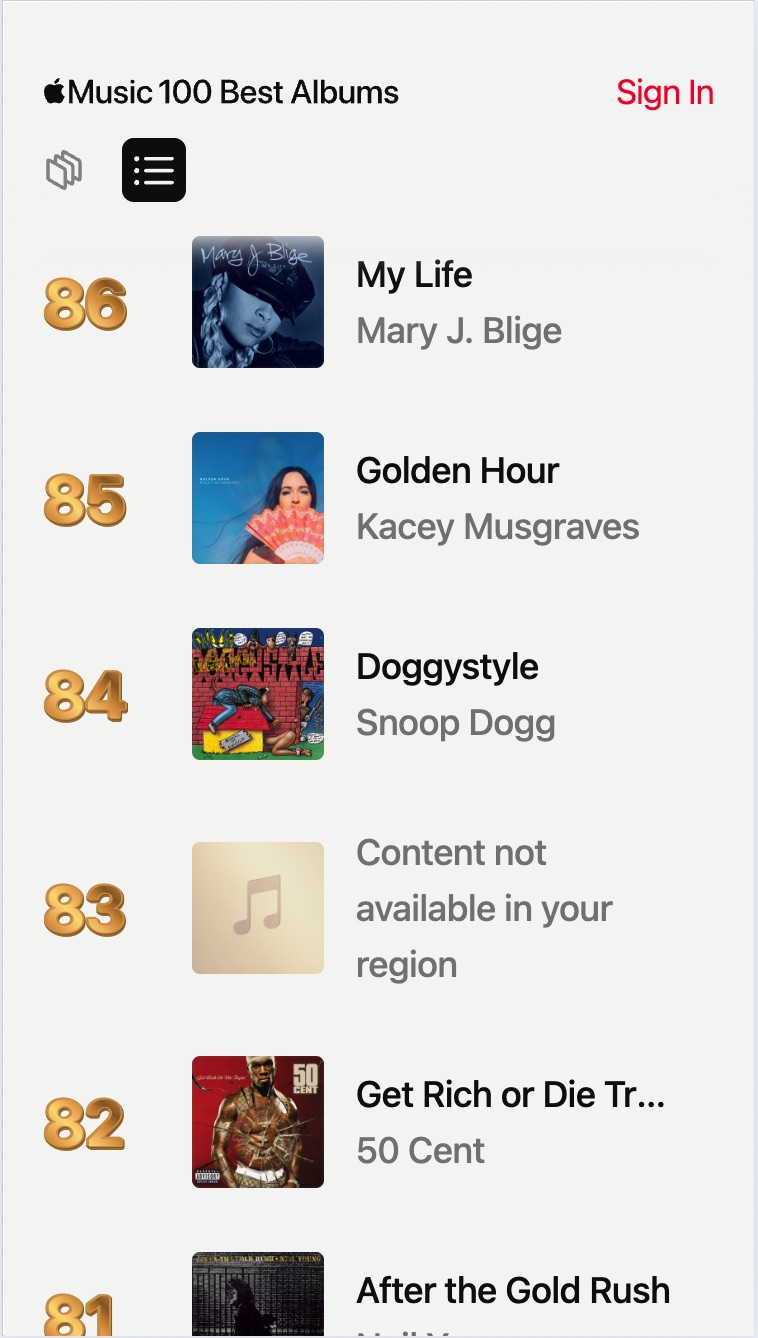
One of my tasks was to realise the motion in the design proposal. Albums move and change places between views, and the proposed effect was a demanding one.
Rather than fight it inside the product code, I built motion prototypes that broke the animation into separate pieces, solved each one, and put them back together.
Once the animation worked, the second challenge was performance, and I spent another round finding ways to optimise it.
The final animation reached about 95% of what was intended. A minor issue remained when albums transition from one spot to another. I had a fix, but it needed the production team to deliver the assets in a different format, which wasn't possible within the project.
The site is written in HTML, CSS, TypeScript and Svelte — a framework I learned for this project.
Svelte does its work at compile time and hands the browser optimised vanilla JavaScript, so there is very little framework running on the page. The site has little state to manage, which made it a good fit.
Types catch a class of errors before the code ever runs, and they make the code easier to read for whoever works on it next.
A design background let me talk through detail with the designers in their own terms. It's why I enjoyed this project: the design was excellent, and my job was to keep it that way in production.